How to Write Property Page Content That Shows in AI Search
Look, there’s no denying it: content writing is hard.
And writing good content? Content that answers questions, holds a reader’s attention, inspires someone to pick you over the competition, and appears in AI search?
That’s like, really, really f***ing hard.
When you add conflicting messages about SEO, the rise of AEO and GEO, Fair Housing compliance, brand voice, and the mayhem that is AI search…
Yeah, it’s just… Ugh.
But that’s exactly why content writing has become so important. It’s also why writers need to be able to block out the noise and keep writing content that is structured, specific, and question-answering.
So, how do you write content for AI search (Google AI Overviews, ChatGPT, Perplexity, Gemini)?
Well, let’s talk about it.
What’s Changed (And What Hasn’t)
AI may be a big deal, but Google is still the G.O.A.T.
Google likely handles about 8–12× more search activity than AI search overall. While AI search is real and growing, John Mueller, Google’s Sr. Search Analyst, said, "There is no such thing as GEO or AEO without doing SEO fundamentals."
At one time, there was overlap between top Google-ranked pages and AI-cited sources. Now, that overlap has gone from
70% to 20%, indicating that ranking on Google and being cited in AI searches are completely different things.
Answer Questions & Be Found
AI seeks content it can cite, which means content should read more like a source, not an advertisement.
For example, if a renter asks AI, “What apartments near downtown Phoenix allow large dogs?” and the property page responds,
“Experience luxury living at its finest,” that suggests the website
lacks real, direct answers.

Fixing it is relatively straightforward.
First, answer questions within the first 40-60 words.
- Don’t bury the answer.
- If your community allows dogs up to 80 lbs., say that in the first line of the pet policy section.
Then, implement a proper schema markup.
- Grab our free template for apartment websites here
Next, use H2/H3 headers that mirror how renters ask questions.
- “Pet Policy at [Property Name].”
- Every H2/H3 should be specific and easy to identify.
Finally, answer FAQs.
- Minimize using “contact us” to answer questions.
- Make the content easy to read.
- Give specific answers (those will outperform vague redirects).
Being Specific is a Trust Signal
Earlier this year, we talked about how E-E-A-T impacts SEO and how the more helpful, reliable, and people-first the content is, the better Google likes it.
Well, it’s the same principle when it comes to making your content AI-readable. You want your website to be a trusted source of information. This means answering questions clearly and precisely.
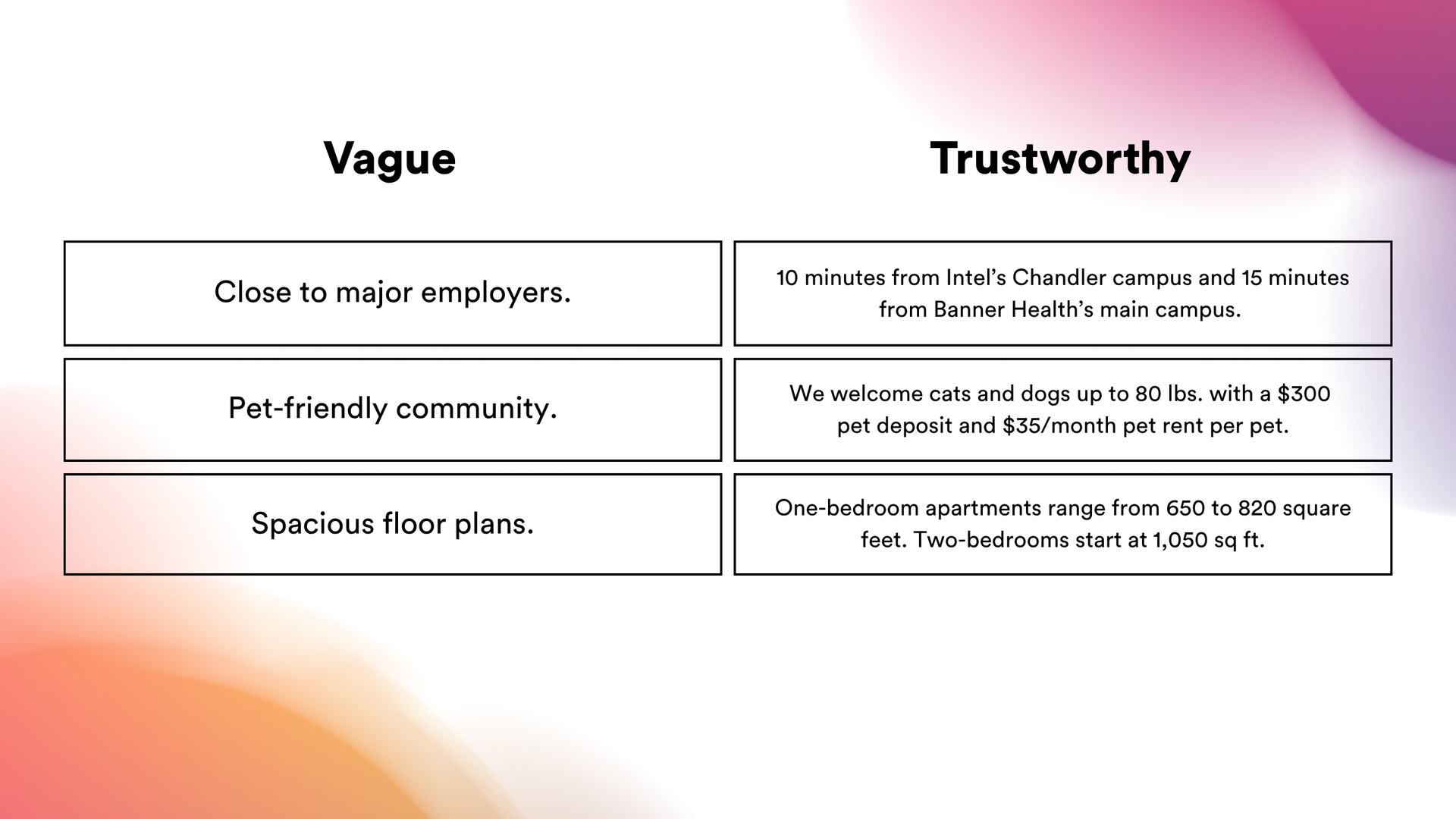
Clear answers make it easier for AI to cite your website. As a bonus, this type of content is good for voice search, too.
Build Hyperlocal Content AI Wants to Pull From
Generic amenities are just that… generic.
Hyperlocal content, however, is a proven strategy and answers
specific questions.
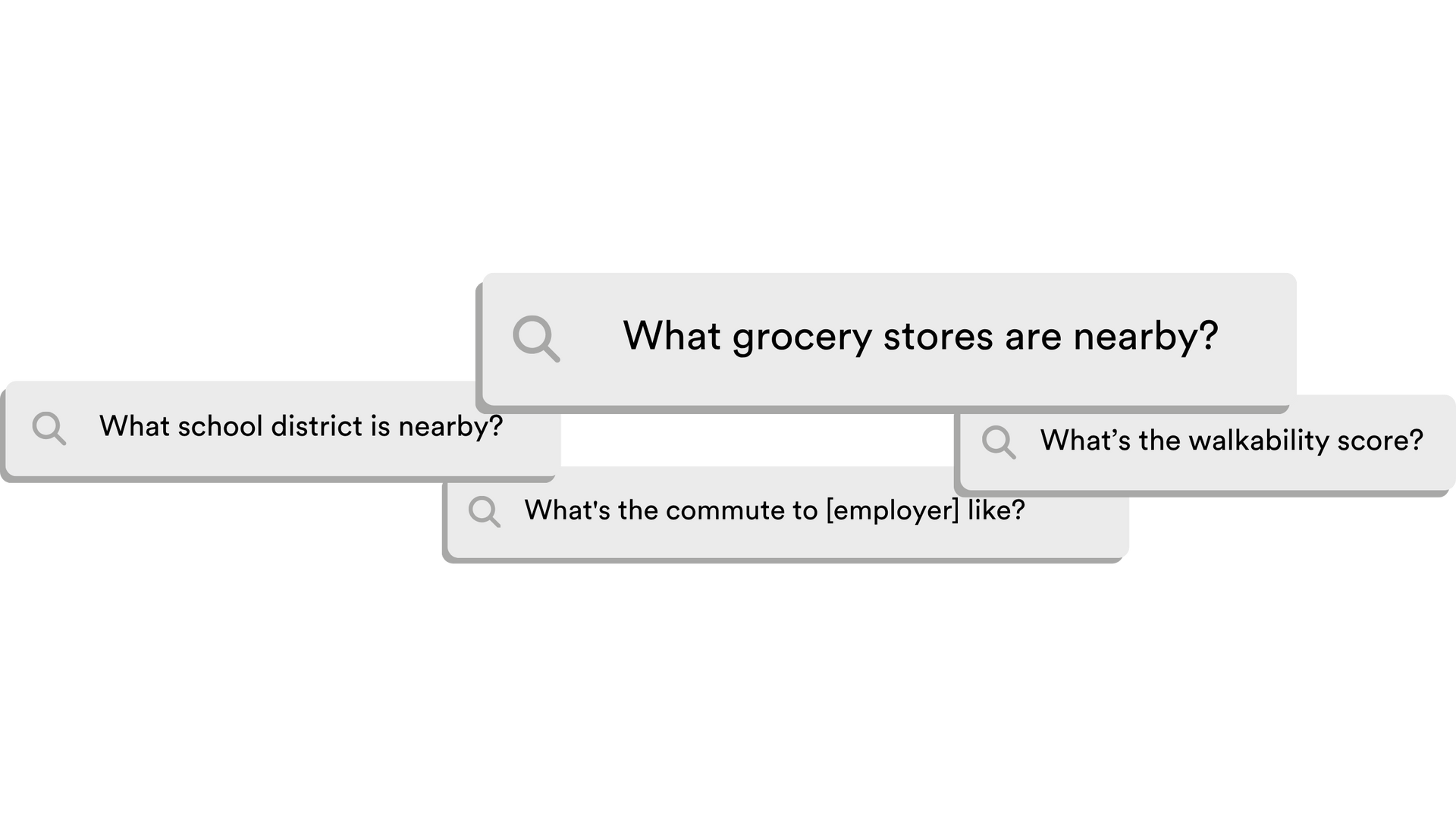
Your content should be focused on what makes your community and neighborhood unique: what attracts people to the area and makes them want to live there?
When you prioritize quality and relevance, the hyperlocal pages will answer these questions, and there are a lot of AI tools out there that can help you answer those questions and address your content needs across multiple channels – not just your website.
Keep It Consistent
It can be challenging to keep all your property details (photos, pricing, amenities) the same across all platforms (including ILS and review sites).
Conflicting information and outdated information is not only frustrating to the end user, but it can also take your visibility in AI results and mark you out as an untrustworthy source.
Naming, descriptions, and branding should be consistent across your website, Google Business Profile, social media, and Internet Listing Services (ILS) because that consistency will help strengthen your authority and relevance.
A National Apartment Association study found Google Maps was the most-cited source in property-management AI searches, accounting for 35% of citations. Apartments.com received 27% of citations overall, making it the second most-cited source and the highest-ranked Internet Listing Service (ILS). This means both are being read as source material, and those sources need to say the same things as your website!
Want to do it at scale? Repli can help you with that through our partnership with Reputation, which ensures listing accuracy across major sources, like Google.
Keep It Fresh & Current
AI systems tend to cite newer or recently updated content more often than traditional search.
Doing something as simple as updating pricing and availability language, refreshing amenity lists, updating policy language when needed, and even adding new photos can help send those positive signals to AI.
Auditing helps.
Yes, it’s tedious, but if you do a quick ChatGPT or Claude search like, “What are the best pet-friendly apartments near [sub market]?” or “Tell me about [Property Name] in [City],” you can see if the answer is wrong or pulls from an ILS.
And if it’s wrong or an ILS appears?
Well, you’ve found your content gap, and you can fix it!
The Bottom Line
AI search isn't the future.
It's right now, and it's reading your property pages whether you're ready or not.
The websites with the clearest answers, the most consistent information, and the most specific details across every platform will come out on top.
Remember: write like a source, not an ad. Update regularly. Mark up your schema.
And when in doubt, ask AI what it thinks about your property because it's already forming an opinion.

ABOUT THE AUTHOR
Tracy is an Organic Media Specialist at Repli, where she helps multifamily marketers turn visibility into velocity. With a background in sales, multifamily, and reputation management, she specializes in connecting SEO strategy, online reputation, and renter behavior to uncover insights that fuel smarter marketing decisions and stronger leasing performance. When she’s not optimizing digital presence, she’s spending time with her family, binge-watching TV, or diving into a good book.
Repli Apartment Marketing Blog
Subscribe to our Newsletter & Blogs
Blog Post Subscribe Form
Share Our Post!
Apartment Marketing Blog