Why Your Amenity Copy Sounds Like Everyone Else's (And How to Fix It)
Most amenity features on an apartment website read like a grocery list.
Resort-style pool. State-of-the-art fitness center. Luxury finishes. Spacious floor plans. Pet-friendly.
While that may be great for an FAQ page, a list of amenities doesn’t exactly distinguish one particular property from another.
The answer to better amenity content that differentiates a property isn’t better adjectives. It’s more specificity, more context, and a willingness to describe the amenity as an experience instead of a feature.
How is it done? Well, let’s talk about it.
What does the amenity mean to the resident?
So, you have a pickleball court.
In the words of the great Shania Twain, “That don’t impress me much.”
To a resident, a pickleball court means grabbing a match with a friend or neighbor without having to go to a local gym. A package room is great to have, but the benefit is that the resident doesn’t have to worry about being home when the package arrives.
When reviewing your amenity content, put yourself in your resident’s shoes. Think about their actual day-to-day, and about how the amenity (whatever it is) is used before writing about it.
For example:
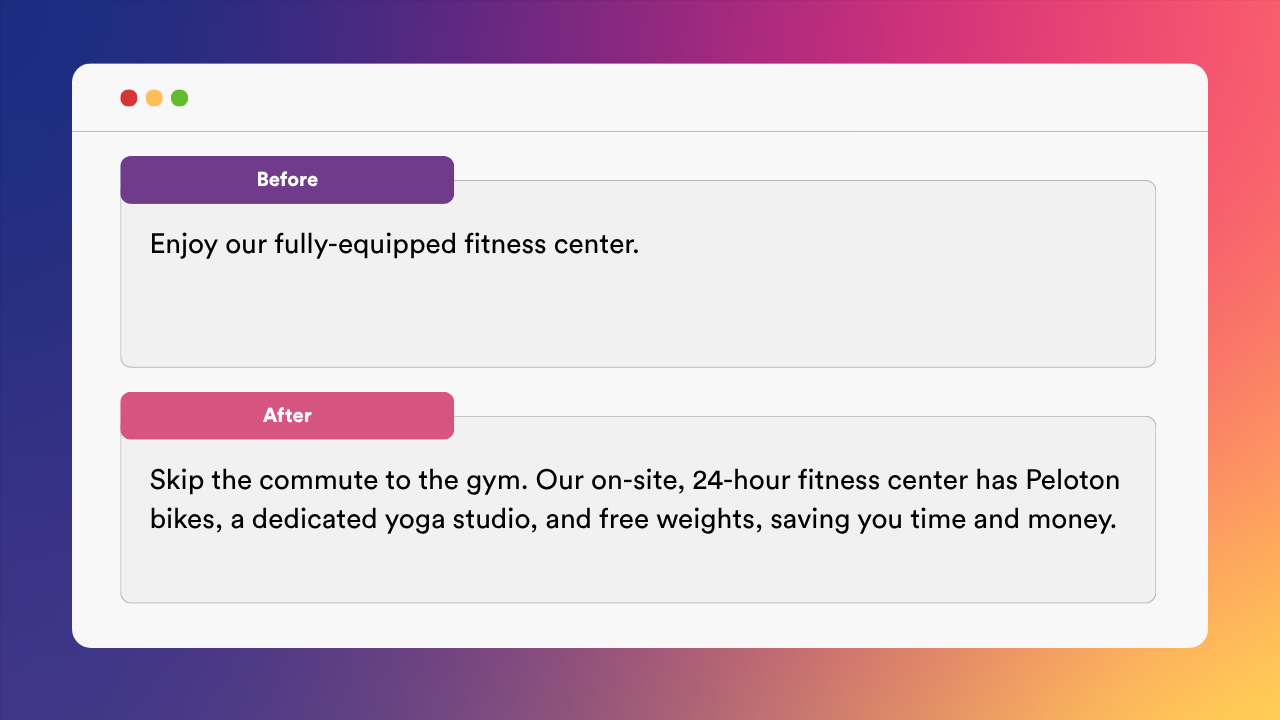
Be Specific
Words like spacious, luxurious, state-of-the-art, and resort-style have lost their meaning. They're vague shorthand for amenities residents are expected to enjoy.
You can easily make the amenities stand out by:
- Including brand names, like Peloton bikes and Nest thermostats
- Numbers, like 24-hour access, 10-foot ceilings, three dog parks
- Named spaces, like coworking areas with private call booths, a rooftop lounge with a fire pit
The more specific the description, the more persuasive, credible, and attention-grabbing.
Make It About The Moment, Not The Room
What happens in the clubhouse with coworking space? What goes on in the outdoor grilling area? Who is hanging out at the on-site dog park?
This is where storytelling comes into play. This is when you can really put yourself in your resident’s shoes.
So, let’s set the stage…
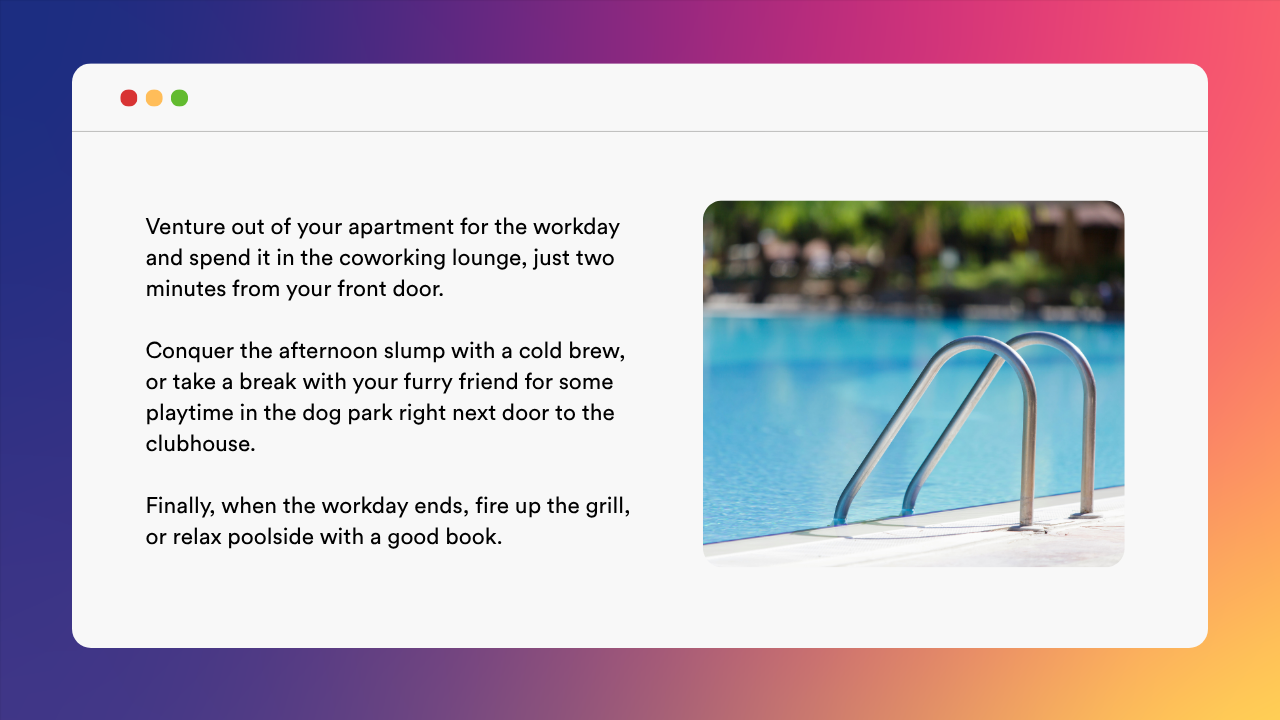
These are the memorable descriptions that help potential residents actually picture living there, which is the whole point of storytelling.
Tie Amenities Into Location
Amenities should tie into what's true about the property and its location.
For example, EV charging stations matter more to residents in metro areas with high EV adoption. Bike storage matters most to those who use the rail trail to commute versus those who live in a car-dependent suburb. A dog wash station is compelling when it’s just minutes from a dog park.
This is where the research you do (market, keyword, competitors, local SEO) pays off, because if you know what matters to renters in a specific market, you can write the amenities that speak to their needs.
Pro-tip: Photos and/or videos of an amenity being used (not empty or staged) are great for storytelling!
Everyone Has Different Needs
Potential residents want to be able to see themselves in the property, and this is where keeping the audience in mind comes into play.
We all know everyone has different wants and needs. Remote workers like coworking lounges and high-speed internet. Pet owners love an on-site pet spa and nearby dog-friendly trails. Socializers want spaces like rooftop lounges and resident events so they can meet their neighbors and hang out with their friends.
Your copy can cater to those different audiences, but it’s vital that your copy not become exclusionary.
Don’t use language like “ideal for empty nesters” or “perfect for young professionals,” as those violate Fair Housing guidelines. Stick to describing spaces and experiences, and let the prospective resident decide if it’s for them.
Words & Pictures = Proof
Great writing should always be paired or backed up with some sort of media, whether it be photos, videos, or reviews.
This is especially useful for amenities that are hard to describe in words. For example, a resident quote about "actually using the coworking space every day" does more work than another paragraph of description.
Write Without Fear. Edit Without Mercy.
If most of your current amenity content is filler, that’s okay.
You can definitely fix it.
Take it one section at a time. Think about what the amenity means to the resident, add specifics, and make it about the moment, not the room. Compare the two side by side, and you’ll see how this approach to amenity copy is worth the extra research and time it takes.
The Takeaway
Writing a feature list is easy.
Distinct copy takes work, research, and discipline. It means asking "so what" instead of reaching for "resort-style." It means writing to a moment, not a room.
Remember, describe what is specific and true about your property and always keep the resident in mind. That’s what distinguishes standout properties from all the rest.
Repli Apartment Marketing Blog
Subscribe to our Newsletter & Blogs
Blog Post Subscribe Form
Share Our Post!
Apartment Marketing Blog