7 Reasons Why Website Templates Are Essential for Large-Scale Multifamily Portfolios
Managing a large multifamily portfolio comes with unique challenges. From maintaining consistent branding across dozens of communities to launching new property websites quickly and keeping content up to date, marketing teams need solutions that are both efficient and scalable.
That's where website templates come in.
Today's multifamily website templates are far more than pre-designed layouts. They're strategic frameworks that help property management companies deliver consistent brand experiences, improve search visibility, simplify website management, and create better digital experiences for prospective residents – all while reducing the time and cost of launching new community websites.
Whether you're overseeing 20 properties or 500, the right website template strategy can help your portfolio grow without increasing the complexity of managing your online presence.
1. Launch New Property Websites Faster
Speed matters.
Whether you're onboarding a newly acquired community, opening a lease-up property, or rebranding an existing location, every day without a website is a missed leasing opportunity.
A well-designed website template provides a proven foundation, allowing marketing teams to launch new websites in days instead of months.
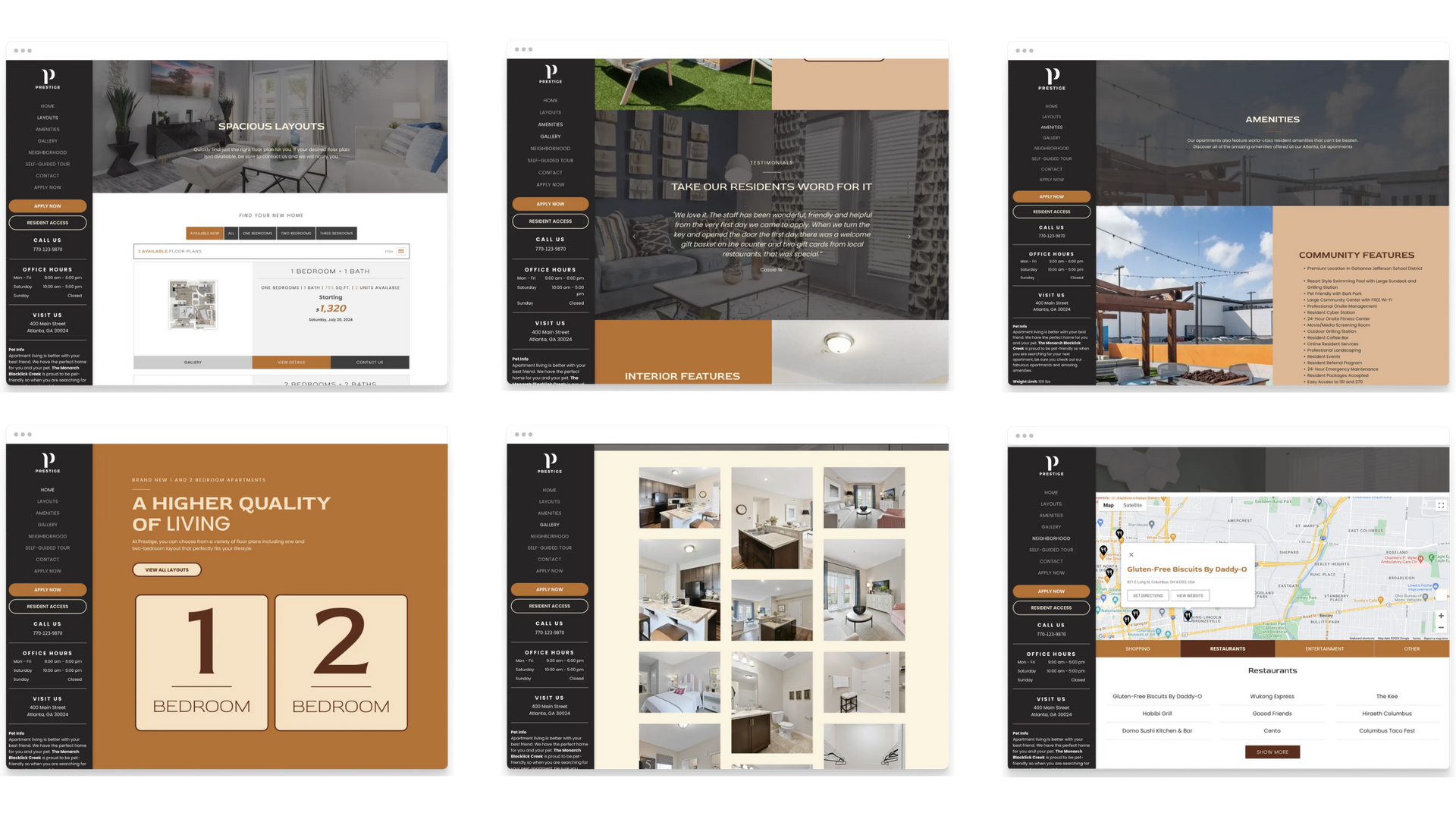
Instead of rebuilding navigation, floor plan layouts, gallery pages, contact forms, amenity sections, and neighborhood pages from scratch, your team can simply customize the content that makes each community unique.
The result? Faster launches, happier teams, and quicker leasing momentum.
2. Create Consistent Branding Across Every Community
One of the biggest challenges for large multifamily portfolios is maintaining a cohesive brand while allowing each property to have its own personality.
Templates solve this beautifully.
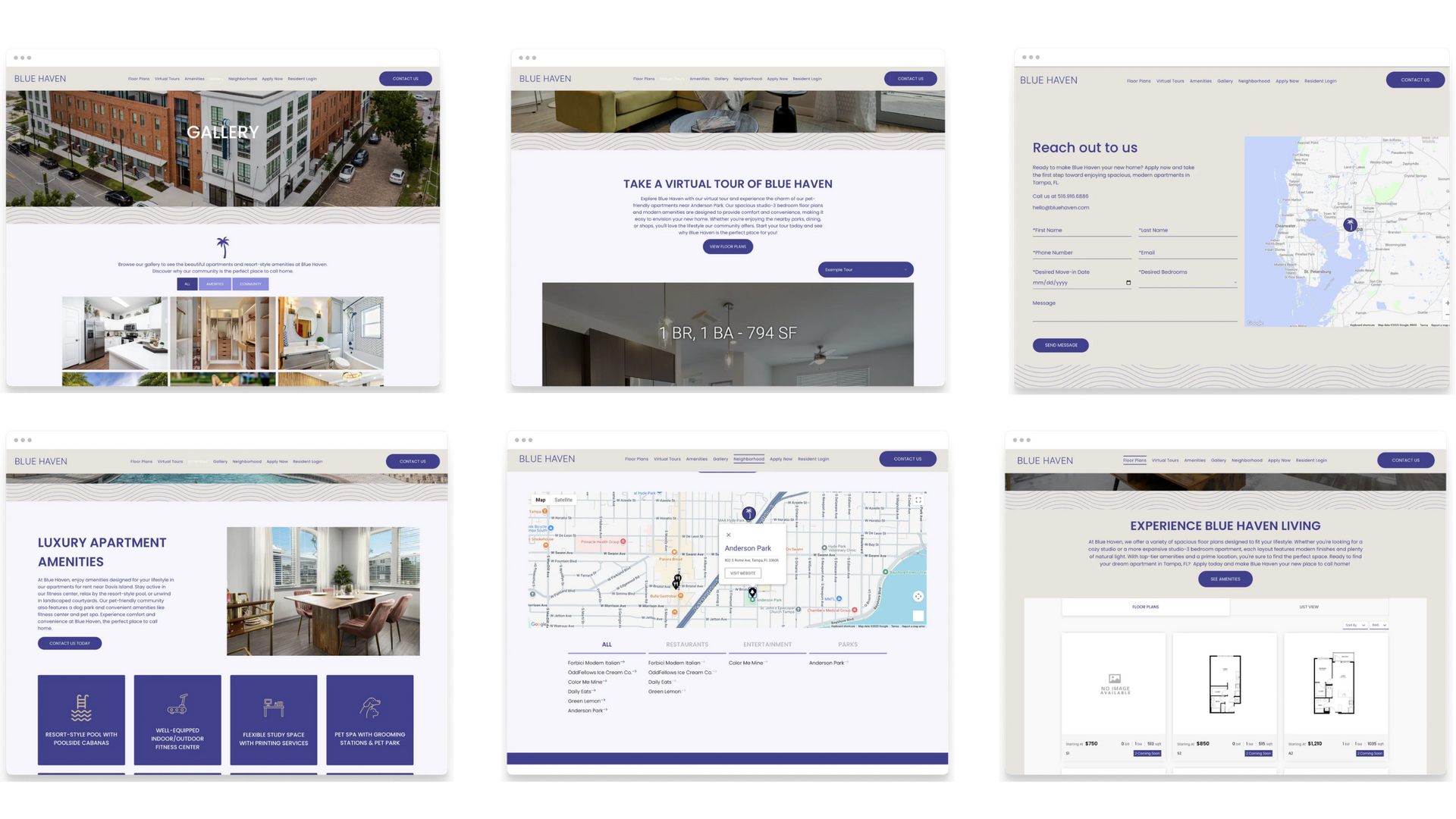
Every property can share consistent navigation, typography, colors, buttons, mobile experiences, and accessibility standards while still highlighting its own photography, amenities, neighborhood attractions, and lifestyle.
The result is a professional, recognizable brand experience that builds trust with prospective residents regardless of which community they're exploring.
3. Improve SEO Across Your Entire Portfolio
When every website follows SEO best practices from day one, your entire portfolio benefits.
A strong multifamily website template should include:
- Optimized heading structure
- Fast-loading pages
- Mobile-first design
- Clean URLs
- Schema markup
- Image optimization
- Internal linking opportunities
- Accessibility improvements
Rather than fixing technical SEO issues one property at a time, you're creating a strong search foundation across every community website.
That means better visibility today and better scalability tomorrow.
4. Simplify Website Management for Marketing Teams
Managing dozens (or hundreds) of websites shouldn't require dozens of different workflows.
Templates standardize the experience, making updates faster and significantly easier.
Need to update a leasing CTA? Add a new amenity? Refresh your navigation? Improve accessibility? Roll out new compliance requirements?
Instead of recreating those updates across completely different websites, your marketing team can make changes consistently across the portfolio.
That's less manual work, fewer headaches, and more time spent on strategy instead of maintenance.
5. Deliver a Better Resident Experience
Prospective residents compare your website to every great digital experience they have online.
Modern website templates prioritize user experience by making it easy to find:
- Available floor plans
- Pricing
- Amenities
- Pet policies
- Neighborhood information
- Contact details
- Online applications
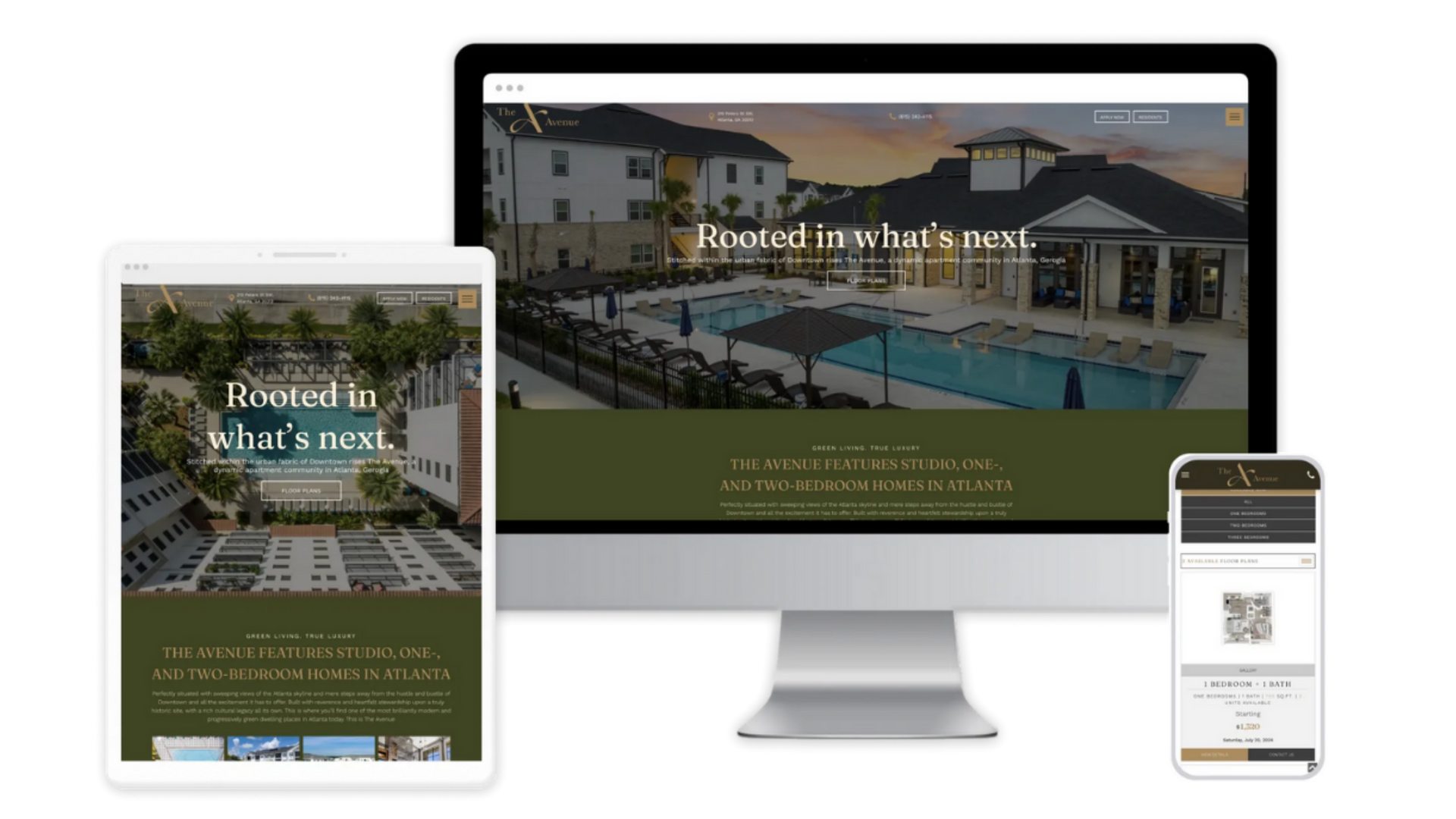
The faster visitors can find the information they need, the more likely they are to schedule a tour or begin an application.
6. Reduce Long-Term Costs Without Sacrificing Quality
Building every property website from scratch may sound appealing, but it often leads to higher costs and longer timelines.
Templates reduce:
- Design expenses
- Development time
- QA requirements
- Ongoing maintenance
- Future redesign efforts
- Content migration complexity
Rather than reinventing the wheel every time your portfolio grows, you're investing in a scalable foundation that continues to deliver value for years to come.
7. Scale Your Portfolio with Confidence
Growth should be exciting.
Whether your company adds five communities or fifty, website templates make expansion significantly easier.
A standardized website framework allows your team to:
- Launch acquisitions quickly
- Support lease-up communities
- Refresh older property websites
- Maintain compliance
- Keep branding consistent
- Roll out portfolio-wide marketing initiatives with confidence
The larger your portfolio becomes, the more valuable a repeatable website system becomes, and templates provide the foundation for sustainable growth without increasing operational complexity.
Frequently Asked Questions
Why are website templates important for large multifamily portfolios?
Website templates help multifamily operators launch new property websites faster, maintain consistent branding, improve SEO, reduce maintenance costs, and simplify portfolio-wide updates.
What's the difference between a custom website template and a template library?
A custom website template is built specifically for your organization and brand, while a template library provides professionally designed layouts that can be customized and deployed quickly. Both offer scalability, but custom templates provide greater flexibility and brand differentiation.
Will every property website look the same if I use templates?
No. Modern website templates create a consistent framework while allowing each community to showcase its own branding, photography, amenities, neighborhood highlights, and unique personality.
Do website templates improve SEO?
Yes. Well-designed templates include technical SEO best practices like mobile responsiveness, optimized page structure, schema markup, fast load times, image optimization, and accessibility improvements, giving every property website a strong foundation for search visibility.
Can website templates support future portfolio growth?
Absolutely. Website templates are designed to scale alongside your portfolio, making it easier to launch acquisitions, support lease-ups, refresh existing communities, and maintain a consistent digital experience as your organization grows.
Repli Apartment Marketing Blog
Subscribe to our Newsletter & Blogs
Blog Post Subscribe Form
Share Our Post!
Apartment Marketing Blog