Google Search Console Can Now Track Your Social Content
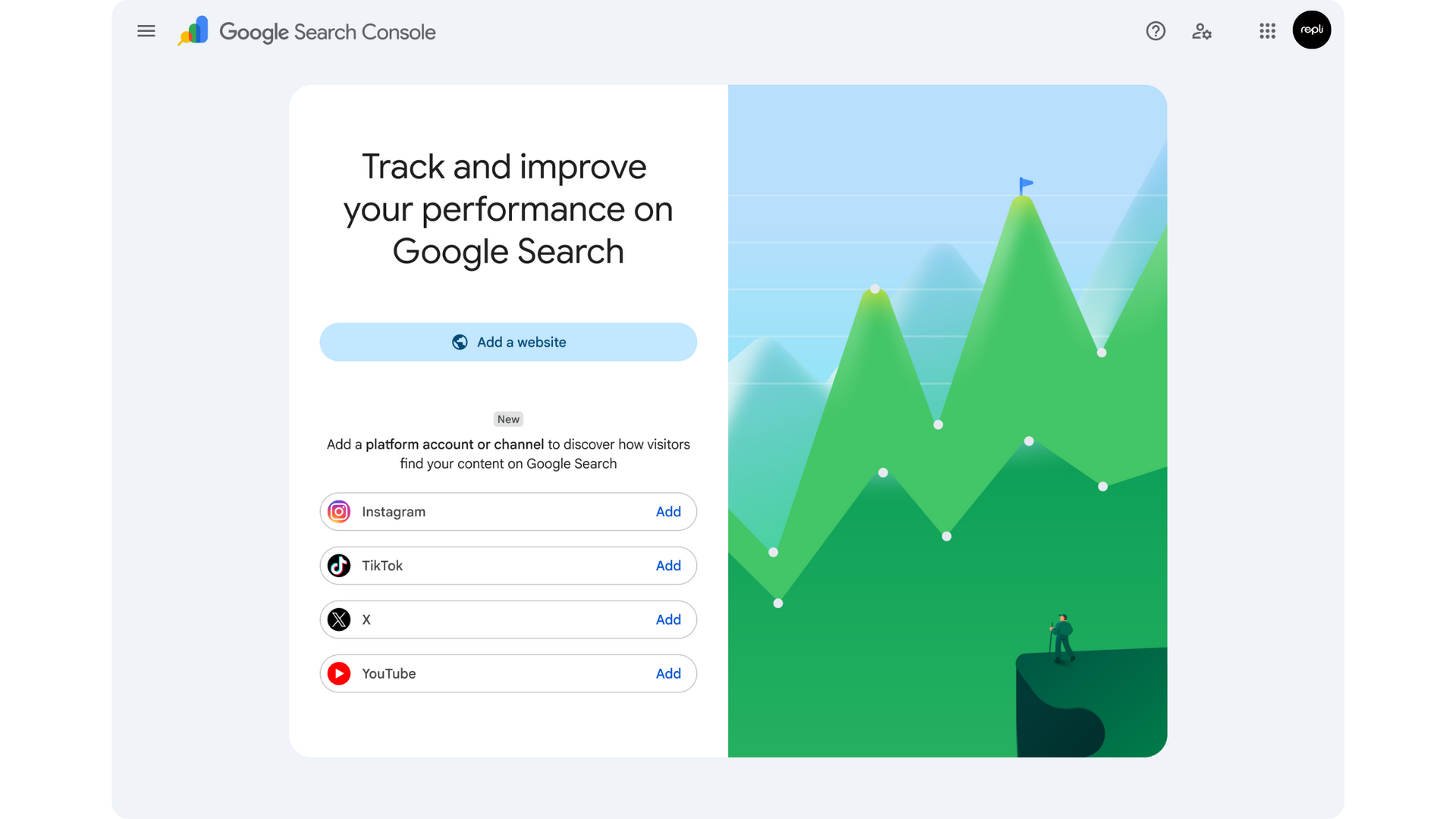
Google quietly rolled out a new Search Console property type this month called platform properties, and it's a bigger deal than the name suggests. For the first time, you can verify a social or video account you don't technically own the domain for – think your property's Instagram, TikTok, X, or YouTube channel – and see how that content is actually performing inside Google Search and Discover.
Translation:
the leasing tour video your team posted to TikTok last week, and the resident testimonial reel that lived on Instagram, can now show up as real, measurable data in the same dashboard where you already track your website's organic performance.
We caught this one early, because we've been watching Google slowly stitch social performance into Search Console since late last year, and this launch is the next domino.
What Google actually shipped.
Platform properties is a new property type inside Search Console. Instead of verifying ownership of a website domain, site owners and creators can now verify accounts on platforms they don't control the backend of, and Google will surface how that content performs in Performance reports, Insights reports, and the achievements section.
That means Google is no longer treating your social channels as a black box outside its ecosystem. It's treating them as content it already indexes and serves inside Search and Discover, and now it's giving you the receipts.
This isn't Google's first move in this direction. Back in December 2025, Google
rolled out social channels in Search Console Insights, which let site owners see reach, clicks, and impressions for social accounts already associated with their website. Platform properties extends that idea and turns it into its own verifiable property type, which suggests Google plans to keep building this out rather than treat it as a one-off experiment.
Worth noting, because we'd rather tell you the whole picture than just the highlight reel: this is still an early-stage rollout. Coverage isn't universal yet, and it's reasonable to expect some rough edges as Google works out verification and attribution across platforms it doesn't own. Treat it as a genuinely useful new data source, not a replacement for the native analytics you already pull from Meta, TikTok, and YouTube.
Why this matters for multifamily marketers.
Most property marketing teams are already producing social and video content: leasing office walkthroughs, amenity reels, resident spotlights, neighborhood guides. What's been missing is a clean way to know whether that content is actually contributing to search visibility, or just living inside its own platform's echo chamber.
Platform properties starts to close that gap. If a renter searches "apartments near [neighborhood] with a rooftop pool" and your TikTok tour surfaces in the results, you'll be able to see that in the same place you already monitor your website's rankings; not buried in a separate app, disconnected from the rest of your funnel.
This is a meaningful step for a strategy question we get from clients constantly:
does our social content actually drive discovery, or is it just brand awareness?
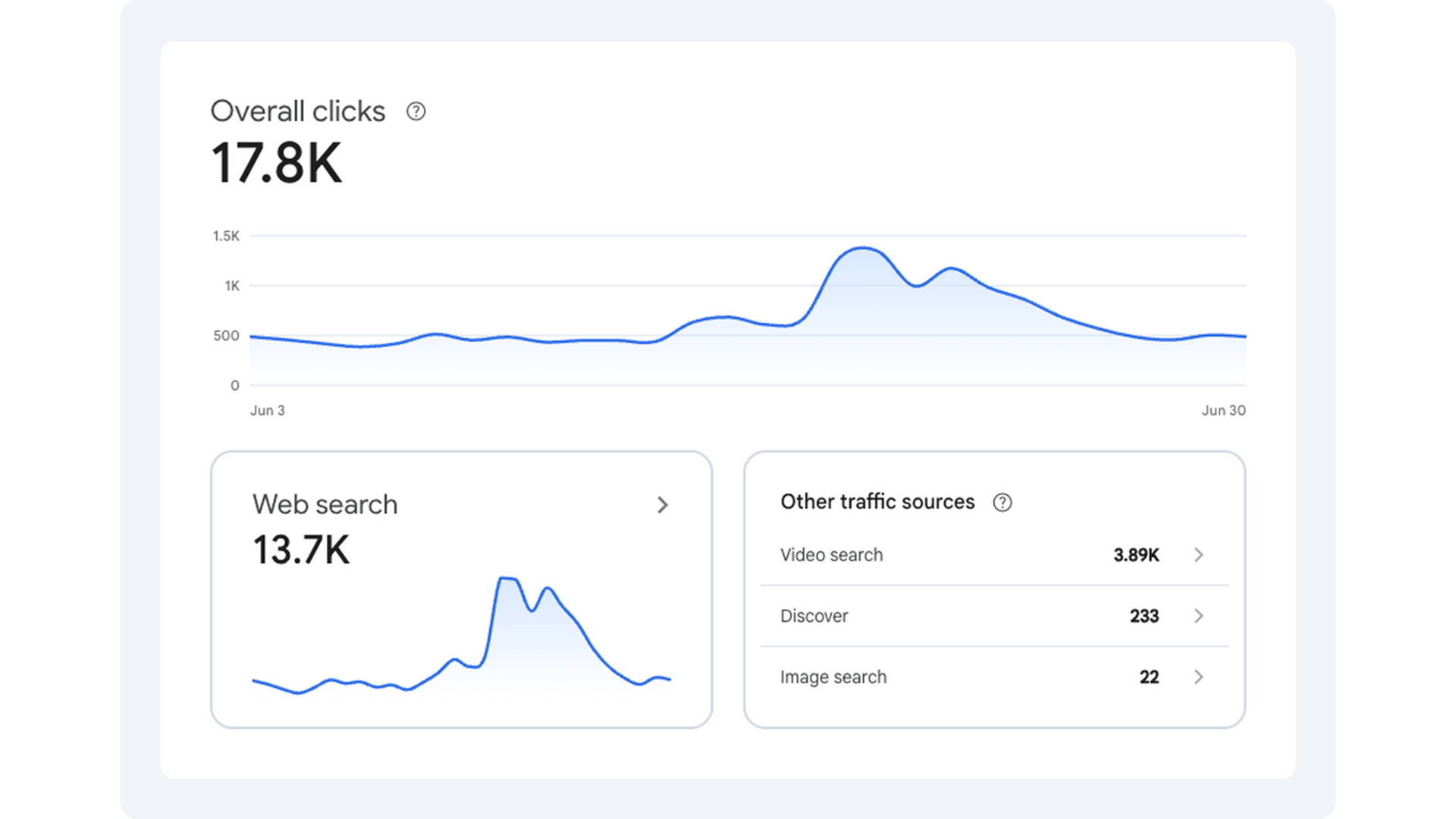
Being able to view social and web performance side by side gets you closer to an answer, and it reinforces something we've been saying for a while: your property's discoverability doesn't live on your website alone anymore. It lives across every surface Google indexes, and increasingly, that includes the content you're already creating for social.
What to do with this now.
Verify your accounts.
If your property has active Instagram, TikTok, or YouTube channels, get them set up as platform properties as soon as availability allows. There's no downside to having the data.
Stop treating social content like it lives in a silo.
If your video and social team operates separately from whoever manages your website's SEO, this is a good excuse to get them talking. The line between "social content" and "search content" keeps getting thinner.
Make your captions and descriptions actually say something.
The same logic that applies to your website's on-page content applies here: vague captions give Google (and renters) nothing to work with. Specific, descriptive copy about the amenity, the neighborhood, or the resident story in the video gives this content a better shot at showing up when it matters.
Don't overhaul your reporting yet.
This is new enough that we'd hold off on rebuilding your measurement framework around it. Watch how the data behaves over the next few months before making it a core KPI.
The bigger picture.
Google has spent the past year quietly erasing the line between "your website" and "everywhere else your brand shows up." AI Overviews pull from reviews. Ask Maps pulls from your Google Business Profile and community reviews. And now Search Console is pulling in social and video performance data too.
The pattern is consistent: Google's discovery surfaces are getting broader, and so is the definition of what counts as "your site." Properties that treat their website, social channels, and video content as one connected discovery strategy, rather than separate line items on a marketing plan, are the ones set up to benefit every time Google ships something like this.
Want help connecting your social content strategy to your organic search performance?

ABOUT THE AUTHOR
Siobhan is the VP of Marketing & Training at Repli. With over 10 years of digital marketing experience, Siobhan is dedicated to pushing boundaries and disrupting the industry by sharing insights on trends, technology, and best practices to help multifamily marketers thrive. When she's not creating content, she's often traveling with her family, filming k-pop dance covers, or exploring her favorite restaurants.
Repli Apartment Marketing Blog
Subscribe to our Newsletter & Blogs
Blog Post Subscribe Form
Share Our Post!
Apartment Marketing Blog