“Luxury” Is Losing Its Meaning in Multifamily Marketing
One of the most often used terms in apartment marketing is “luxury.” In the multifamily sector, it can be found in search results, social media posts, apartment descriptions, website copy, and property headlines. But can it really make a property stand out when almost every community uses the same word?
As apartment marketing gets more competitive and renters grow accustomed to seeing the same descriptions repeated across property websites, this is an issue worth posing. Some multifamily clients have even requested that marketing teams cut back on or refrain from using the term “luxury” in recent SEO recommendations because they believe it is overused in the sector.
Why the term “luxury” is used so frequently
The use of the term “luxury” in apartment marketing is understandable. When the term was first adopted in the real estate sector, it signified high-end finishes, special features, and a premium price point reflecting those qualities.
Over time, however, it has become a generic label rather than a precise description. Whether a unit features quartz countertops or the complex offers a resident lounge or a mailroom, property management companies apply the term to almost any new development.
A problem arises when that same description appears on the websites of hundreds of competing apartment complexes.
While using the word “luxury” to describe apartments can help a residential complex position itself in the market, it becomes much harder for a prospective tenant to distinguish one property from another. If every complex in the area makes the same claim.
More Can Be Said About Details Than Just “Luxury”
Think about these two descriptions:
“Enjoy luxury apartments with contemporary conveniences.”
Compared with:
“Select apartments with one, two, and three bedrooms that have private balconies, walk-in closets, quartz countertops, and stainless-steel appliances.”
Renters can find useful information in the second description.
Stronger SEO opportunities may also result from this strategy. A property can organically combine terms pertaining to its particular features, apartment types, location, and facilities instead of continuously utilizing a general adjective.
For instance, a property could identify its "one-, two-, and three-bedroom apartments in South Austin" and outline the particular characteristics offered within each layout, rather than primarily depending on "luxury apartments in Austin."
Making descriptive language more meaningful is the aim rather than the removal of it.
How about SEO?
Many residential complexes target "luxury apartments" since it is a high-volume search term, but high volume also suggests intense competition. The meta descriptions, headlines, and page copy of competing properties are nearly identical, and they all bid on the same keyword.
Due to the overabundance of similar listings in search results, it is challenging for a particular property to stand out or position itself uniquely once a potential tenant clicks through.
Certain amenities, such as in-unit washers and dryers, pet-friendly buildings, walkability to services and grocery stores, a specific amenity (such as a pool or coworking space), or a certain pricing range, are frequently of interest to prospective tenants.
Furthermore, there is a fundamental difference between using a phrase because it accurately describes the property and using a term simply because tenants search for it.
The phrase "luxury apartments" can certainly be included in a property's SEO strategy if data shows that prospective tenants use it in their searches. However, it should not be repeated solely to boost keyword rankings; instead, it should be naturally integrated into valuable content.
Creating content based on the property's actual features and location is a more effective approach.
This could include phrases such as:
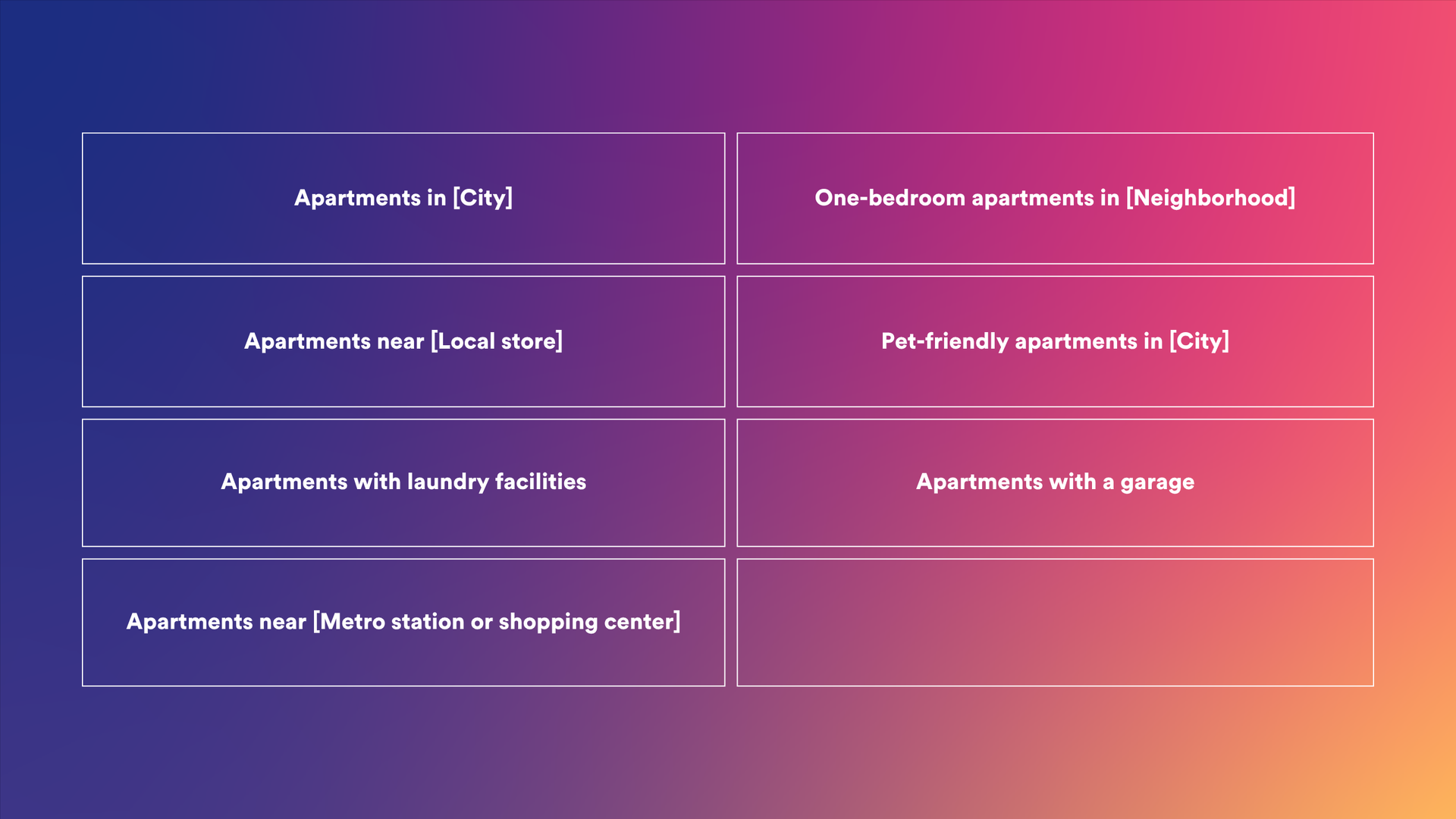
Compared to a generic description, these terms provide greater context and support search queries.
The Future of Multifamily Copy Is More Specific
While the term "luxury" may still have a place in multifamily housing marketing, it should not be the sole element conveying the message.
The most effective property websites successfully combine search-optimized language with descriptions that answer a fundamental question: what does this community actually offer?
For most communities, opting for specific, sensory, and benefit-focused language will prove more effective at differentiating the property from a crowded search landscape and setting realistic expectations for prospective residents. In a highly competitive apartment market, the goal is not merely to sound impressive, but to be specific enough that interested parties can get to know the property before even scheduling a visit.
Repli Apartment Marketing Blog
Subscribe to our Newsletter & Blogs
Blog Post Subscribe Form
Share Our Post!
Apartment Marketing Blog