The End of Expanded Text Ads is Coming June 2022
It’s official - major changes are coming to Search campaigns in Google Ads starting June 30, 2022.
Google is ushering in a new era of automation and machine learning and with it comes the end of a Google Ad standard - expanded text ads.
While these changes may seem scary, Google’s shift towards machine learning is going to be a game-changer and will result in more conversions, higher click-thru rates, and better overall campaign performance. Here’s everything you need to know about this upcoming change.
What’s Changing
After June 30th, any pre-existing expanded text ads will continue to serve and users can still access reporting on expanded ad performance. Advertisers will also be able to pause and resume expanded text ads, but will no longer be able to create or edit the ads. Responsive search ads will be the only Search ad type available in standard Search campaigns.
Why Responsive Search Ads?
The way consumers search online is constantly changing, making it nearly impossible for advertisers to manually show the most relevant ad possible for users. To help advertisers serve better ads, Google released responsive search ads in July of 2018.
Responsive search ads, while they look like expanded text ads, actually offer far more options than its counterpart. Google offers up to 15 different headlines and up to four descriptions - giving advertisers 40,000 different options.
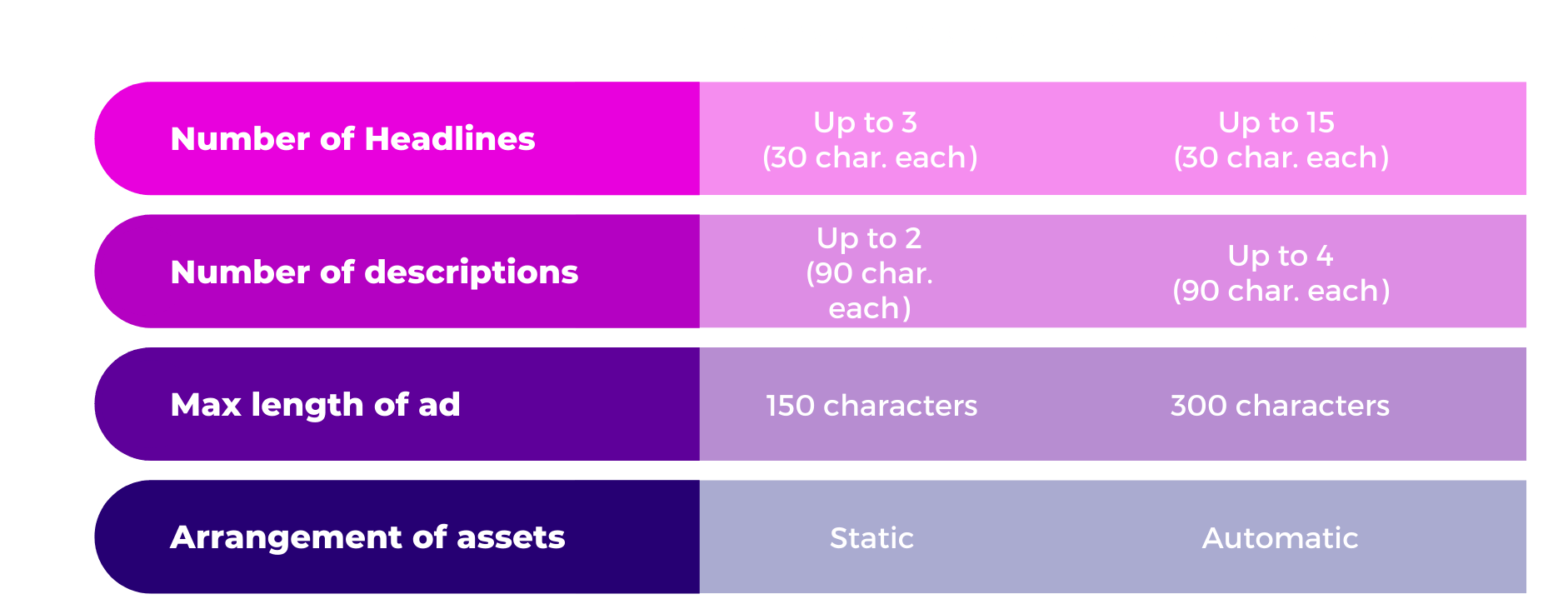
The sole purpose of responsive search ads is to utilize machine learning to automatically identify the best combination of headlines and descriptions to deliver the right ad to the right person. According to Google, advertisers that switched from expanded text ads to responsive search ads saw an average of 7% more conversions with a similar cost per conversion.
What are the Pros and Cons of Responsive Search Ads?
Responsive search ads offer far more flexibility and reduce the amount of time advertisers need to spend testing ad copy. By nature, machine learning gets smarter as it collects more data over time - meaning your ad campaigns are always being optimized. That means your ads are getting in front of the right audience at the best time with the best message. Additionally, responsive search ads are more likely to appear in more searches, which can attract more clicks and, hopefully, more conversions.
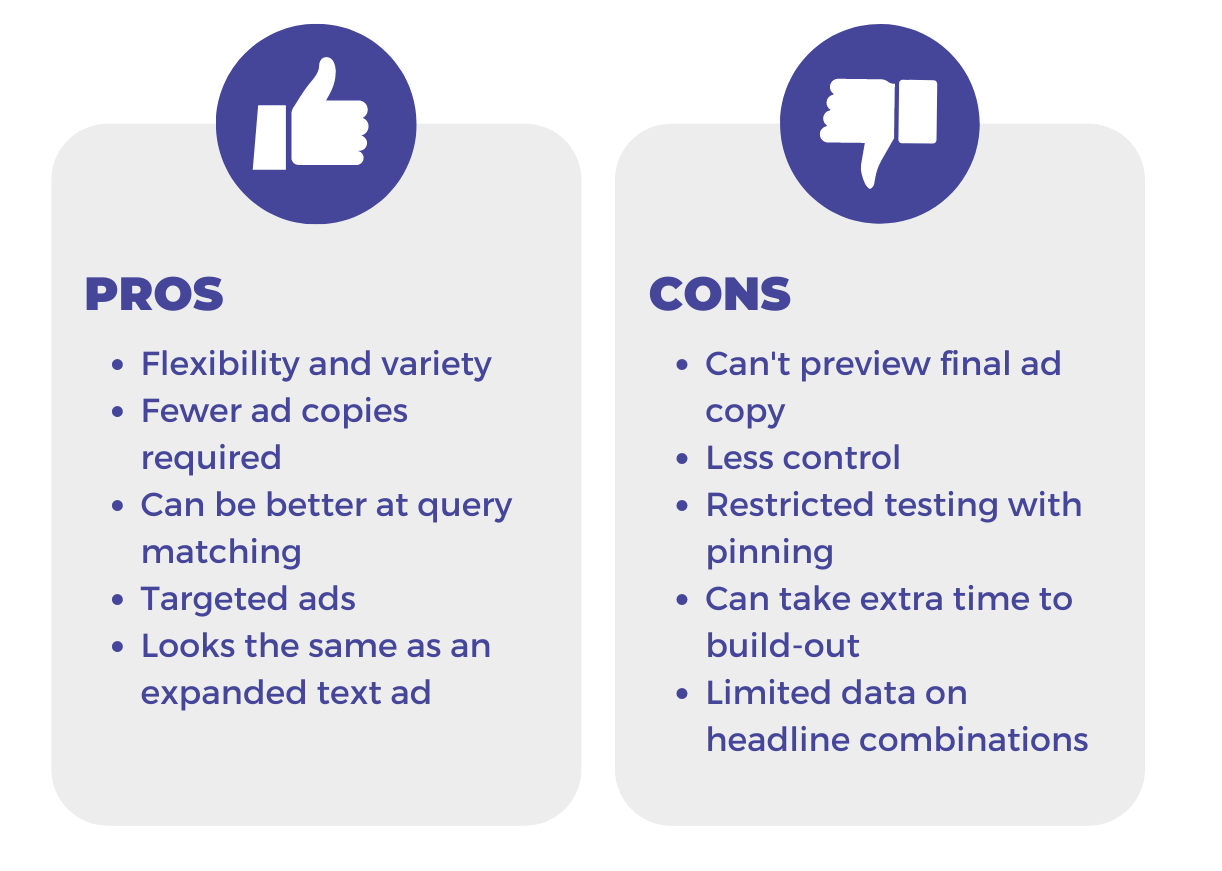
While there are numerous advantages to using responsive ads, there are a few disadvantages worth mentioning. One of the biggest drawbacks is the lack of human oversight. Advertisers are unable to preview the final ad copy before it’s shown to users, and there is little to no reporting available on which combinations of headlines and descriptions were the most successful.
Advertisers can test the pinning feature that allows you to pin certain headlines or descriptions in a guaranteed position, but Google advises excessive pinning will work against the automation fueling responsive ads.
While the lack of control and granular reporting may be disadvantageous to some, overall the machine learning and built-in optimization features of responsive ads are not only a win for advertisers, but a win for end-users as well.
Best Practices for Responsive Search Ads
Responsive search ads, like any other ad type, do come with their own list of best practices. It’s important to remember that traditional ad copy best practices still apply and are highly encouraged by Google.
To ensure your responsive ads are fully optimized, we suggest following these easy tips:
- Add 1 responsive search ad to every ad group
- Use the Ad Strength indicator to achieve a good or excellent score
- Include your target keywords in headlines
- Write as many unique headlines as possible
- Pin important information but do so sparingly
- Repurpose high-performing content from your expanded text ads
- Review your account recommendations for additional insights on how to improve your ads
Repli's Final Thoughts
While automation at scale is the way of the future, it comes with big changes. Advertisers should absolutely use the next few months to familiarize themselves with responsive search ads and start implementing them into ad campaigns now. Right now is the best time to test expanded text ads alongside responsive search ads to help you identify what works best.
It’s vital that advertisers keep an open, curious mind as Google continues to shift towards machine learning product features and updates. Continue to test, evaluate, and be flexible when it comes to your ad strategy. If you have questions about your property’s ad accounts or have any questions about responsive search ads, you can reach out to our Google ad experts today.
Repli Apartment Marketing Blog
Subscribe to our Newsletter & Blogs
Blog Post Subscribe Form
Share Our Post!
Apartment Marketing Blog