Structured Data for Apartments: Improve Your Local SEO and Drive More Leads
In today's competitive digital landscape, ensuring that your apartment website stands out in all search engine results is crucial. This blog will delve into the world of structured data—what it is, why it’s important, and how it can significantly enhance your local SEO strategy. You'll learn how to implement structured data effectively, explore various types of schema markups relevant to apartment marketers, and discover practical tips and tools to help you get started. Let’s unlock the potential of structured data to improve your website’s visibility, increase click-through rates, and attract more quality leads.
What Is Structured Data?
Structured data is a standardized format for providing information about a page, helping search engines like Google understand its content better. Often referred to as schema or schema markup, this special code format enhances the rich snippets displayed under the page title on SERPs (Search Engine Results Pages).
For example, a “feta pasta recipe” search on Google may show two results. The first result might include a rich snippet displaying a rating, number of reviews, and total preparation time, thanks to structured data markup for recipes. The second result, lacking structured data, will appear less informative.
Structured data isn’t limited to recipes. It can be used for reviews, restaurants, products, services, local businesses, books, movies, and more. You can refer to schema.org, a collaborative effort between major search engines, to find the specific code format or markup required for successful implementation.
Why Is Structured Data Necessary for My Apartment’s Website?
While many marketers understand the crucial ranking factors in a strong local SEO strategy, fewer are aware of the growing importance of structured data. Structured data helps Google deliver the most relevant information about your website to users, increasing the likelihood of clicks. More clicks boost your rankings, leading to even more clicks and leads.
Apartment marketers should focus on two types of structured data: Local Business data and ApartmentComplex data. These ensure Google displays the correct information about your apartment community.
Local Business Markup.
Local Business markup lets Google know you’re a local business serving a specific area, enhancing your local search ranking.
Example of Local Business Schema Markup:
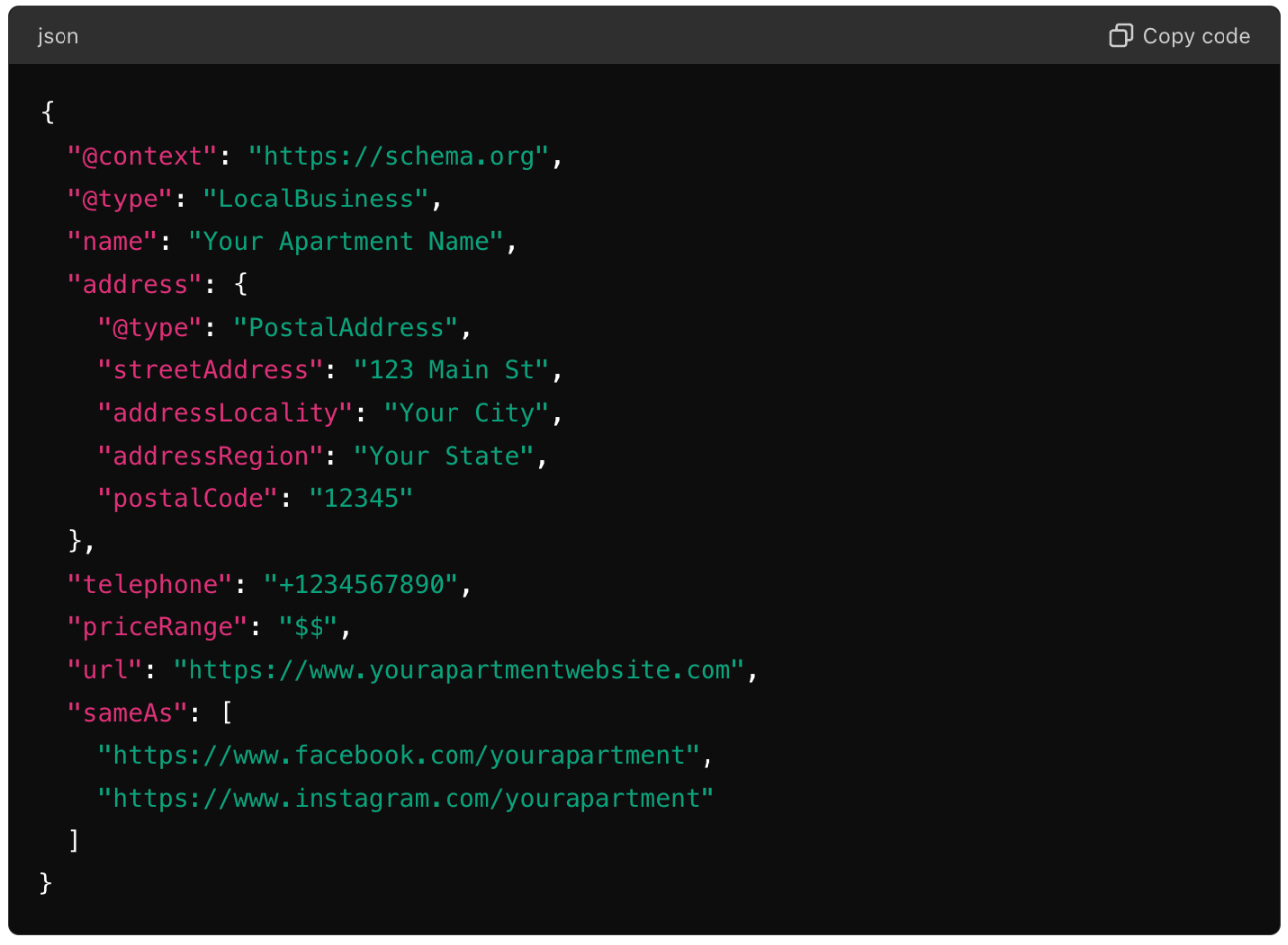
This markup provides essential information such as:
- Name, Address, and Phone Number (NAP)
- Price Range
- Reviews
- Email Address
- Social Media Links
- Google My Business Page Link
- Photos
- Website URL
- URL to Map of Property
ApartmentComplex Markup.
ApartmentComplex markup provides similar information but explicitly identifies your site as an apartment complex, ensuring your traffic comes from apartment searches.
Example of ApartmentComplex Schema Markup:
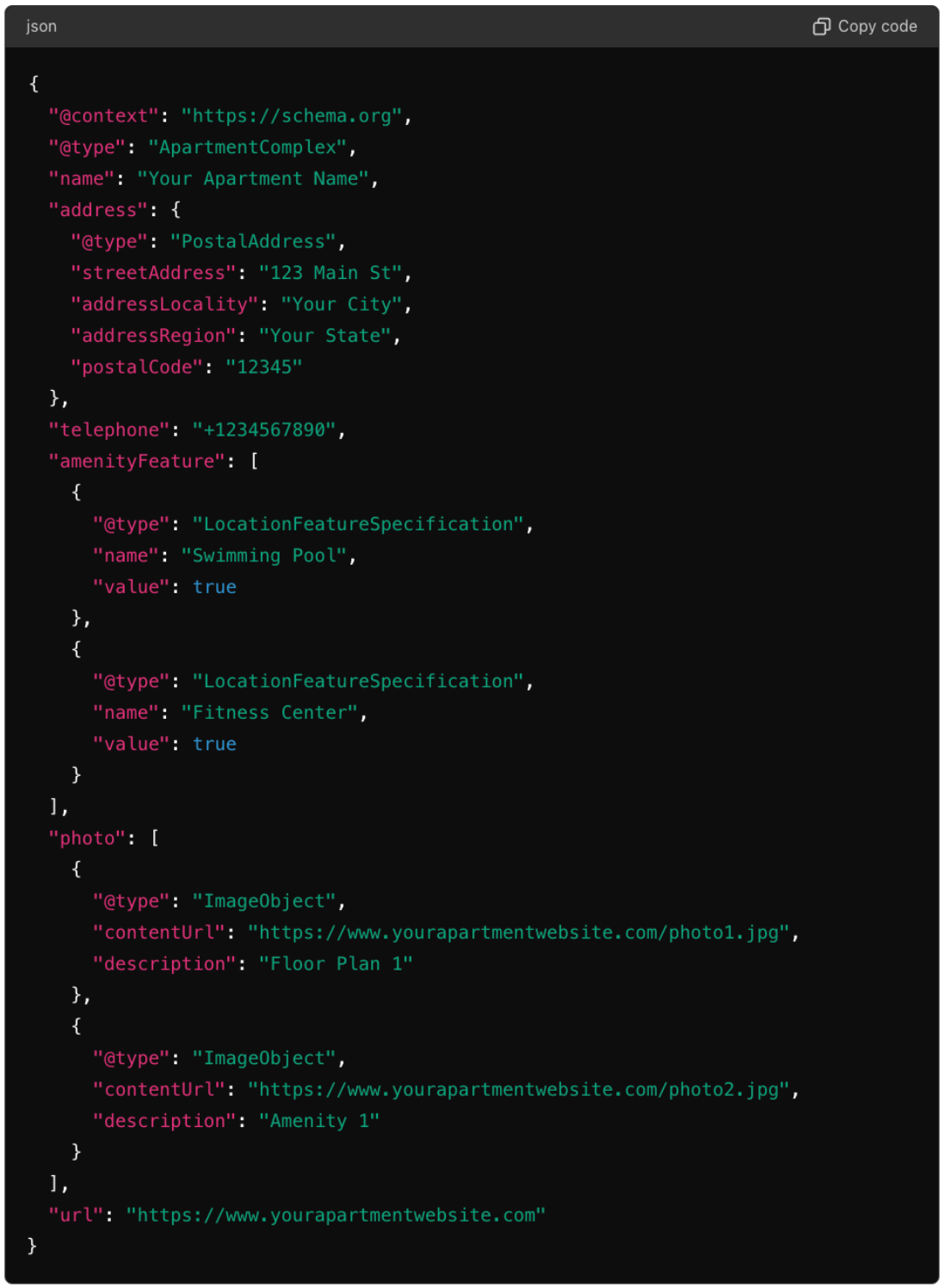
This markup provides apartment-specific data points such as:
- Amenity Features
- Alternate Names (useful for rebranded properties)
- Photos of Floor Plans or Amenities
How Do I Start Using Structured Data?
Implementing structured data may seem daunting initially, but it’s achievable with the right approach. Utilize these tips and tools.
- Use Plugins: Plugins can generate basic structured data markup, though they might offer minimal information.
- Hire a Developer: For more robust code, consider hiring a web developer or consulting a property tech company like Repli.
- Test Your Markup: Use the Google Structured Data Testing Tool to validate your markup.
- Implement via Google Tag Manager:
Embed the markup into your website's HTML using a custom HTML tag in Google Tag Manager.
Additional Resources.
- Google Search Console: Monitor your site's performance and structured data implementation.
- Yoast SEO Plugin: Helps with structured data for WordPress sites.
- Google Structured Data Markup Helper:
Tool for generating structured data markup.
Conclusion.
Structured data is essential for enhancing your apartment website’s SEO, improving local search rankings, and driving more qualified leads. By understanding and implementing structured data, you can ensure that Google accurately represents your website’s information, leading to higher visibility and better user engagement. If you need further assistance, our team of multifamily marketing professionals is here to help. Contact us today to optimize your apartment marketing strategy with structured data.
Repli Apartment Marketing Blog
Subscribe to our Newsletter & Blogs
Blog Post Subscribe Form
Share Our Post!
Apartment Marketing Blog